
Glycerol-Free Phi29 DNA polymerase (HC)
Glycerol-Free Phi29 DNA Polymerase (HC) is a highly processive, high-fidelity enzyme with strong strand displacement activity, enabling robust isothermal DNA amplification. Designed for applications requiring accurate and efficient DNA synthesis, it is ideal for whole genome amplification, single-cell genomics, and molecular diagnostics—whether in liquid or lyophilized assay formats.
Key Product Features
- Strong strand displacement activity enables efficient isothermal amplification at 30°C
- High processivity, synthesizing products up to 70 kb in length
- Exonuclease Activity (3' → 5') providing proofreading capability for high-fidelity replication
- High yields, ideal for amplification from small amounts of template
- Improved freeze-thaw stability, optimized for liquid and lyophilized assay development
Description
Meridian’s Glycerol-Free Phi29 DNA Polymerase (HC), (MDX240) is a highly processive enzyme with strong strand displacement activity, enabling efficient isothermal DNA amplification from low-copy samples. Its 3′→5′ exonuclease (proofreading) activity ensures high-fidelity amplification, while its exceptional processivity allows for the synthesis of ultra-long, high molecular weight DNA products.
This high-concentration, glycerol-free formulation is optimized for multiple displacement amplification (MDA) and rolling circle amplification (RCA), facilitating whole genome amplification, single-cell genomics, and molecular diagnostics. The enzyme’s strong strand displacement activity ensures robust performance, even from low-copy templates.
Glycerol-Free Phi29 DNA Polymerase (HC) does not contain glycerol and has been optimized to deliver robust performance, making it ideal for the development of diagnostic assays in both liquid and lyophilized formats.
Key points:
- Enables robust isothermal DNA amplification with high accuracy
- Produces ultra-long, high molecular weight DNA with minimal template
- Suitable for whole genome amplification (WGA), single-cell genomics, and molecular diagnostics
- Glycerol-free formulation improves stability for diagnostic applications
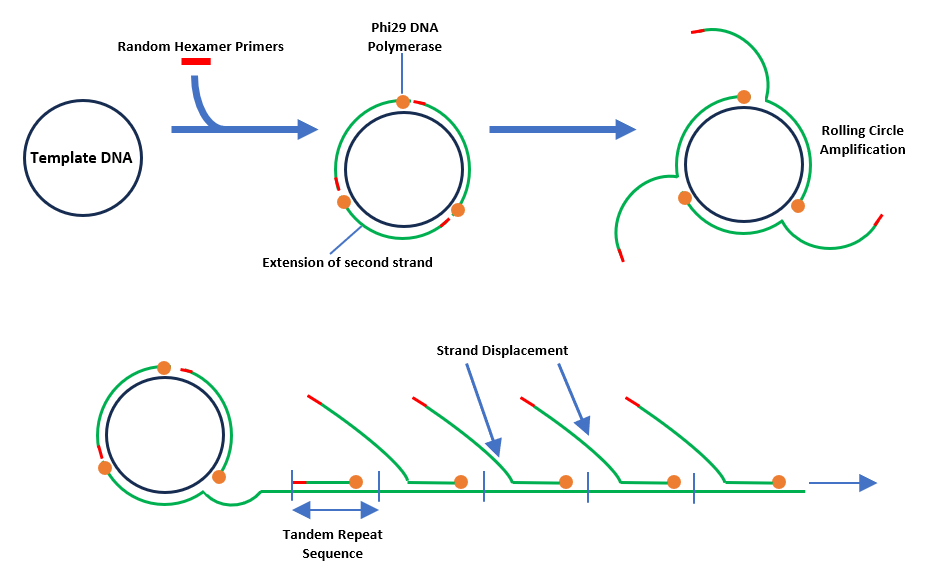
Figure 1. Schematic for rolling circle amplification (RCA).
Rolling circle amplification (RCA) is an efficient isothermal amplification method for synthesizing ultralong ssDNA by using a circular DNA template and a primer to generate long, concatemeric DNA strands. A strand-displacing DNA polymerase (Phi29 DNA polymerase) continuously synthesizes DNA, moving around the circular template and producing multiple tandem repeats of the original sequence. This process yields high-molecular-weight DNA, making RCA ideal for applications such as genomic studies, molecular diagnostics, pathogen detection, and single-cell analysis.
Example Protocol
| Reagent Name | Volume | Final concentration |
|---|---|---|
| Lyo-Ready Phi29 DNA Pol Reaction Buffer, 5x | 10 µL | 1 x |
| Exo-resistant Primers (100 μM) | 0.5 µL | 1 μM |
| 100 mM dNTP mix | 0.5 µL | 1 mM |
| dNTP Mix, 100 mM | 0.2 μL | 1 mM |
| Circular DNA template | X μL | variable |
| Glycerol-Free Phi29 DNA Polymerase (HC), 100 U/μL | 0.1 μL | 10 U/rxns |
| 100 mM MgCl2 mix | 2.5 μL | 5 mM |
| Water | Up to 50 μL |
Glycerol-Free Phi29 DNA Polymerase (HC), MDX240
Glycerol-free, high concentration enzyme with exceptional strand displacement and processive synthesis properties, ideal for rolling-circle amplification (RCA).
Documents & Resources
Catalogs & Brochures
FAQs: Glycerol-free Phi29 DNA polymerase (HC)
What is the recommended temperature for Phi29 Polymerase?
The recommended temperature for Phi29 Polymerase is 30°C.
Does the reaction need to contain DTT?
DTT can improve the activity of Phi29 Polymerase, so it is recommended that for reaction buffers that have undergone multiple freeze/thaw cycles, DTT should be replenished by adding additional DTT.
How can Phi29 DNA Polymerase be inactivated?
Phi29 DNA Polymerase can be heat inactivated at 65°C for 10 minutes.
What type of primers are used?
Phi29 DNA Polymerase has a strong 3′-5′ exonuclease activity that can degrade unprotected primers. Therefore, it is strongly recommended to use primers with at least two phosphorothioate internucleotide bonds at the 3′ end.
Why glycerol-free?
Enzymes supplied in glycerol-free formulations are compatible with ambient temperature stabilization processes such as lyophilization or air-drying
Get In Touch With A Specialist
Have questions about a product? Want to learn more about Meridian’s molecular or immunoassay reagent portfolio? We want to hear from you!
By submitting your information in this form, you agree that your personal information may be stored and processed in any country where we have facilities or service providers, and by using our “Contact Us” page you agree to the transfer of information to countries outside of your country of residence, including to the United States, which may provide for different data protection rules than in your country. The information you submit will be governed by our Privacy Statement.