Revogene® C. difficile
Improves satisfaction among patients and physicians by providing rapid, accurate, actionable results for the detection of Clostridium difficile infection (CDI)
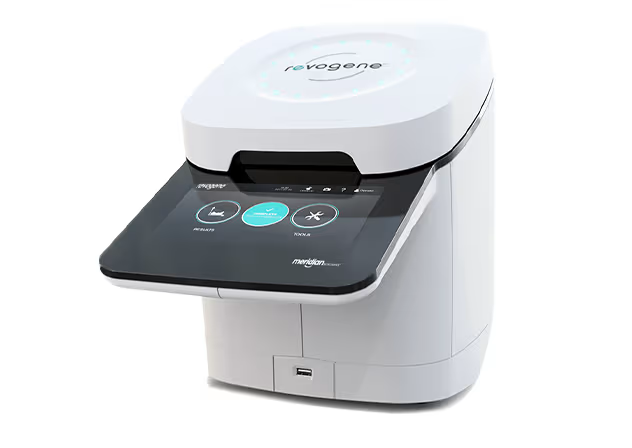
Why Revogene C. difficile?
Revogene provides healthcare systems an opportunity to minimize the overall burden of C. difficile through improved care and efficiency by helping to reduce the risk of missing a true positive with the accuracy of molecular. Fast, actionable results enable physicians to make informed decisions about patient management and treatment resulting in reduced healthcare costs associated with isolation and antibiotics. Revogene is a flexible, reliable molecular platform that allows health systems to provide testing closer to the patient and advance the quality of care through simplified sample processing and efficient workflow.

Efficient workflow – Sample to result in 3 easy steps

Flexible platform – Run multiple assays with different sample types on a single run

Platform for growth – Single analyte and multiplex testing capability

Total solution – Can be paired with Meridian immunoassays for a scalable testing solution
Related Tests
Tests
Related Products
Immunocard® Toxins A&B
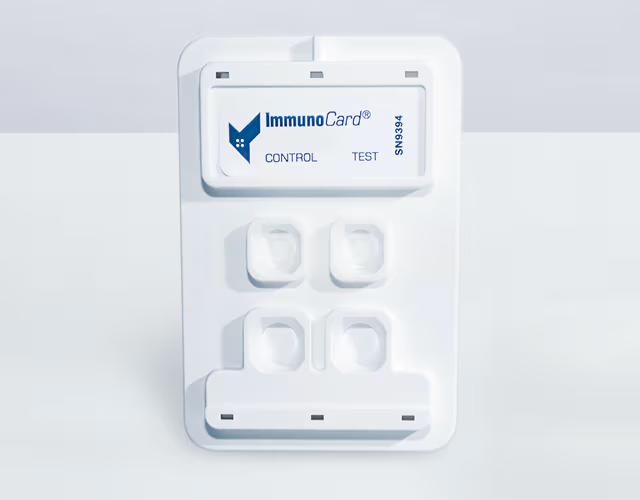
Immunocard® C. difficile GDH
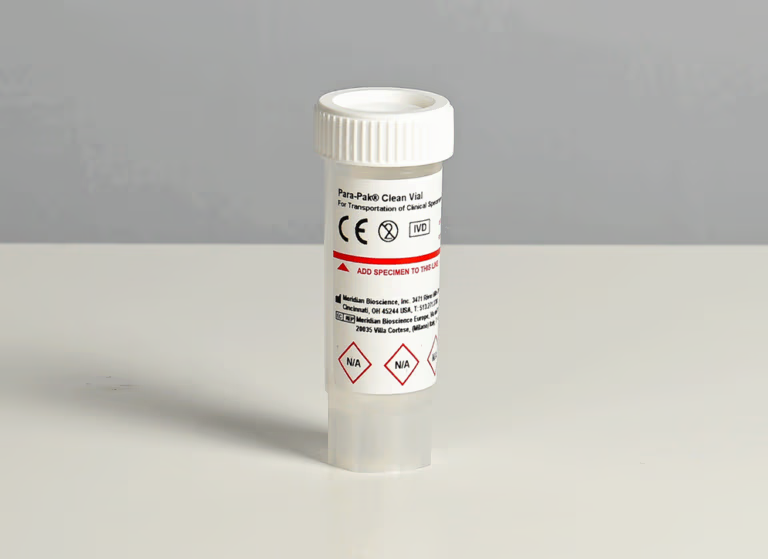
Clean Stool Transport

The system is very easy to work with, I was able to start and run an experiment after only 5 minutes of training!
Ingrid Op den Buijs
Senior technician molecular diagnostics
PAMM Laboratories
Veldhoven, Netherlands
Definitive answers, confidence in results
Support & Documents
Downloadable PDFs
Para-Pak
The Para-Pak system provides a standardized procedure for the routine collection, transport, preservation, and culture of stool specimens for bacterial enteric pathogens. Learn More.
FAQs
What are the differences between colonization and infection?
What is the best-performing method (ie, in use positive and negative predictive value) for detecting patients at increased risk for clinically significant C. difficile infection in commonly submitted stool specimens?
Use a stool toxin test as part of a multi-step algorithm (ie, glutamate dehydrogenase [GDH] plus toxin; GDH plus toxin, arbitrated by nucleic acid amplification test [NAAT]; or NAAT plus toxin) rather than a NAAT alone for all specimens received in the clinical laboratory when there are no pre-agreed institutional criteria for patient stool submission.
What is the most sensitive method of diagnosis of CDI in stool specimens from patients likely to have CDI based on clinical symptoms?
Use a NAAT alone or a multi-step algorithm for testing (ie, GDH plus toxin; GDH plus toxin, arbitrated by NAAT; or NAAT plus toxin) rather than a toxin test alone when there are pre-agreed institutional criteria for patient stool submission.
Does detection of fecal lactoferrin or another biologic marker improve the diagnosis of CDI over and above the detection of toxigenic C. difficile? Can such a subset predict a more ill cohort?
There is insufficient data to recommend the use of biologic markers as an adjunct to diagnosis.
What is the suggested CPT Code?
Pricing
- Email: [email protected]
- Phone: +1 800 696-0739
- International Sales Extension: +1 513 271-3000