Double Trouble: Viral Co-Infections and Their Role in Cancer Progression
Cancer remains one of the world’s most complex diseases, arising from an interplay of genetic, environmental, and infectious factors. While
Choose a country to view content specific to your location
Next-generation sequencing has become remarkably powerful but in many ways, it is still designed for a world of centralized laboratories...
Cancer remains one of the world’s most complex diseases, arising from an interplay of genetic, environmental, and infectious factors. While...
In antibody-based immunoassays, antigen selection is the key biological decision driving assay performance. The structure, epitope integrity, and expression format...
Cancer diagnostics have undergone a major transformation over the past two decades, shifting from late-stage diagnosis and generalized treatment toward...
Next-generation sequencing has become remarkably powerful but in many ways, it is still designed for a world of centralized laboratories...
Cancer remains one of the world’s most complex diseases, arising from an interplay of genetic, environmental, and infectious factors. While...
Whole genome sequencing (WGS) has become a cornerstone of modern genomics, powering discovery in oncology, infectious disease, inherited disorders, and...
In antibody-based immunoassays, antigen selection is the key biological decision driving assay performance. The structure, epitope integrity, and expression format...
Cancer remains one of the world’s most complex diseases, arising from an interplay of genetic, environmental, and infectious factors. While
Since COVID-19, changes in the immune system, specifically increased levels of autoantibodies such as rheumatoid factor (RF), have begun to
The 2025 flu season has been more intense than recent years, with elevated infection rates and notable pressure on healthcare
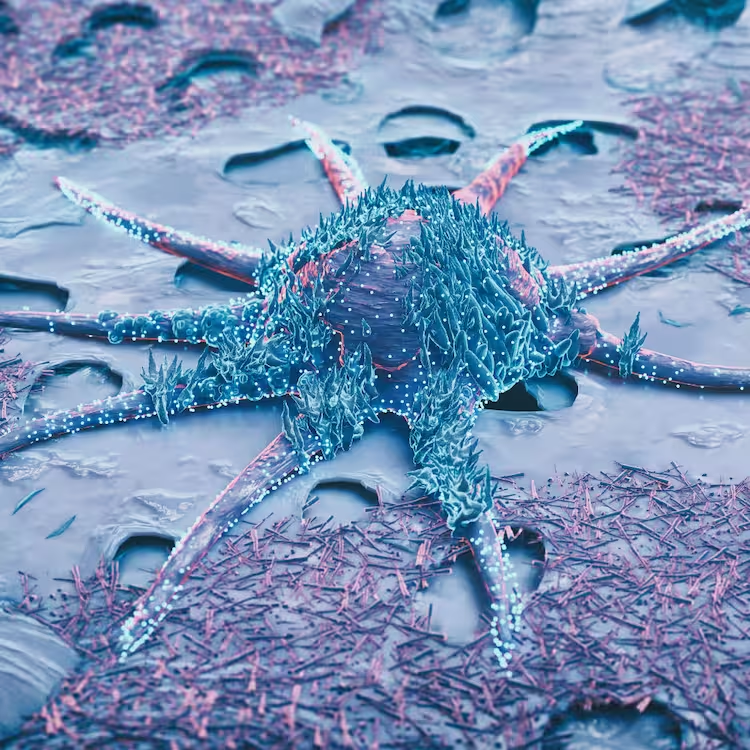
The article discusses the underappreciated risks posed by viruses that can lead to cancer. It highlights the significant influence of
Next-generation sequencing has become remarkably powerful but in many ways, it is still designed for a world of centralized laboratories
Cancer remains one of the world’s most complex diseases, arising from an interplay of genetic, environmental, and infectious factors. While
Whole genome sequencing (WGS) has become a cornerstone of modern genomics, powering discovery in oncology, infectious disease, inherited disorders, and
Cancer diagnostics have undergone a major transformation over the past two decades, shifting from late-stage diagnosis and generalized treatment toward